
Quick Summary
The tech industry offers strong opportunities in both Full Stack Development and Data Analytics. A Full Stack Developer builds web applications using front-end and back-end development, working with tools like React, Node.js, APIs, and cloud platforms. In contrast, Data Analytics focuses on extracting insights using data science, SQL, machine learning, and data visualization tools like Power BI and Tableau. Additionally, both careers require different skills but offer high demand, strong salaries, and growth. Developers create systems, while analysts interpret data for decision-making. Choosing the right path depends on whether you prefer coding and building products or analyzing data and generating insights.
Full Stack Developer vs Data Analytics: Career Guide 2026
The tech industry continues to expand rapidly. Furthermore, businesses rely on digital platforms and data-driven decision making more than ever. As a result, roles such as hire Full Stack Developer, Data Analyst, and Data Scientist are in high demand. Additionally, companies like Techstack Digital leverage offshore software development services to help businesses overcome legacy systems, optimize budgets, and scale effortlessly. This shift creates multiple career paths in software engineering and data science while driving innovation, flexibility, and speed in modern software infrastructure.
However, choosing between Full Stack Developer vs Data Analytics often creates confusion. Both fields offer growth, stability, and high salaries. Additionally, both require different skills, tools, and thinking approaches. At Techstack Digital, where businesses transform their software systems for long-term impact, this decision becomes even more critical. This guide explains each role in detail and helps you choose the right path based on your interests and long-term goals.
What is a Full Stack Developer?
Definition of Full Stack Development
A Full Stack Developer builds complete web applications. Additionally, this role combines front-end development and back-end development into one workflow. Developers design user interfaces using HTML, CSS, JavaScript, and frameworks like React or Angular. Furthermore, they manage server-side programming using Node.js, Python, Django, and ExpressJS.
On the front end, developers focus on user experience and interface design. Additionally, they create responsive layouts and interactive elements. On the back end, they handle databases, APIs, and logic. Furthermore, they use SQL or MongoDB for database management and build scalable systems.
This combination makes full stack development essential in modern web development. Additionally, companies prefer developers who understand the complete tech stack. As a result, a full stack software engineer becomes a valuable asset in software engineering teams.
Key Technologies and Skills for Full Stack Developers
Full stack developers use a wide range of tools. Additionally, they combine multiple technologies to build efficient systems. Core skills include:
- Front-end technologies: HTML, CSS, JavaScript, React, Angular
- Back-end technologies: Node.js, ExpressJS, Django, Python
- Database management: SQL, MongoDB
- API development: REST APIs, API integration
- Version control: Git
- Cloud and DevOps: AWS, Docker, Kubernetes
Furthermore, developers must understand full stack frameworks and JavaScript frameworks. Additionally, knowledge of DevOps improves deployment and scaling processes.
Full stack developers also work with emerging technologies. For example, they explore Artificial Intelligence (AI), Blockchain, and Internet of Things (IoT) integrations. Additionally, they use containerization tools like Docker to manage applications efficiently.
This wide skill set defines modern full stack technologies. Additionally, it allows developers to build scalable and secure systems.
Career Path and Job Roles
The career path of a Full Stack Developer offers flexibility. Additionally, professionals can move across multiple roles in software engineering. Common job roles include:
- Full Stack Software Engineer
- Web Developer
- Software Developer
- Backend Engineer
- Front-end Developer
Furthermore, developers can specialize in API development, cloud platforms, or DevOps. Additionally, they can work with AWS, Azure, or Kubernetes for advanced infrastructure.
Freelancing also remains a strong option. Additionally, many developers build independent web applications and SaaS products. Full-time roles provide stability and team collaboration. However, freelancing offers flexibility and control over projects.
This career path continues to grow as businesses demand scalable web solutions. Additionally, the role evolves with new technologies and frameworks.
What is Data Analytics?
Definition of Data Analytics
Data Analytics focuses on extracting insights from data. Additionally, it plays a key role in data-driven decision making. Professionals analyze patterns, trends, and behaviors using structured and unstructured data.
Furthermore, Data Science expands this process by including machine learning, predictive analytics, and advanced modeling. Data analytics focuses more on interpretation and reporting. Additionally, it uses statistical analysis and data analysis techniques to solve business problems.
Data analysts collect and process data. Additionally, they create reports and dashboards. They use tools like Excel, Power BI, and Tableau for data visualization.
Moreover, organizations rely on business analytics to improve operations. Additionally, they use data dashboards to monitor performance. This makes data analytics essential across industries.
Key Skills and Tools for Data Analytics
Data analytics requires a strong technical foundation. Additionally, professionals must understand data structures and analysis methods. Key skills include:
- SQL for analytics and database queries
- Python and R for data processing
- Data visualization tools: Tableau, Power BI
- Big Data technologies: Hadoop, Spark
- Statistical analysis and modeling
Furthermore, analysts must understand data mining and data modeling. Additionally, they apply machine learning (ML) techniques for predictions.
Data processing plays a central role. Additionally, analysts clean and transform raw data into meaningful insights. They also use analytical tools to automate workflows.
This combination of tools and skills defines modern data analyst skills. Additionally, it supports effective business intelligence strategies.
Career Path and Job Roles
Data analytics offers diverse career opportunities. Additionally, professionals can specialize based on interests. Common roles include:
- Data Analyst
- Business Intelligence Analyst
- Data Scientist
- Predictive Analyst
Furthermore, professionals can focus on data dashboards, reporting, or machine learning. Additionally, some move into advanced Data Science roles.
Companies across industries require data professionals. Additionally, sectors like finance, healthcare, and e-commerce depend heavily on analytics.
Career growth remains strong due to increasing data generation. Additionally, businesses rely on insights to make strategic decisions.
Core Differences Between Full Stack Developers and Data Analytics
Nature of Work
The nature of work differs significantly. A Full Stack Developer builds applications. Additionally, they handle both front-end and back-end development.
In contrast, Data Analytics focuses on interpreting data. Additionally, analysts identify patterns and trends. They support business decisions using insights.
Developers create products. Analysts analyze performance. Furthermore, developers focus on functionality, while analysts focus on information.
Technological Focus
Full stack development focuses on building systems. Additionally, it uses tools like React, Angular, Node.js, and SQL.
Data analytics focuses on insights. Additionally, it uses big data tools, machine learning, and statistical analysis.
Furthermore, developers work with API integration and server-side programming. Analysts work with data visualization and predictive models.
Work Environment
Full stack developers work in software teams. Additionally, they collaborate with designers and DevOps engineers.
Data analysts work with business teams. Additionally, they support decision-making processes.
Furthermore, developers focus on product delivery. Analysts focus on performance improvement.
Explore More
Also Learn about how to choose the right devops service provider
Required Skills for Full Stack Development vs Data Analytics

Technical Skills for Full Stack Developers
Full stack developers require a broad skill set. Additionally, they must understand:
- HTML, CSS, JavaScript
- React, Angular
- Node.js, ExpressJS, Django
- SQL and database management
- APIs and cloud platforms like AWS
Furthermore, knowledge of Git, Docker, and Kubernetes improves efficiency. Additionally, DevOps practices enhance deployment workflows.
Technical Skills for Data Analytics
Data analysts require analytical skills. Additionally, they must understand:
- SQL for data management
- Python and R
- Data visualization tools
- Big Data technologies
- Machine learning and statistics
Furthermore, understanding algorithms and modeling improves insights. Additionally, knowledge of business intelligence tools enhances reporting.
Soft Skills
Both roles require strong soft skills.
Full Stack Developer:
- Problem-solving
- Debugging
- Team collaboration
Data Analyst:
- Analytical thinking
- Attention to detail
- Communication
Additionally, both roles require continuous learning.
Job Opportunities and Salary Comparison
Job Market Overview
The job market remains strong for both roles. Additionally, companies demand skilled professionals in web development and data analytics.
Tech companies, startups, and enterprises hire both developers and analysts. Additionally, remote opportunities increase global demand.
Salary Comparison
Salaries vary based on experience, location, and skill set. Additionally, certifications, specialization, and industry demand significantly impact earning potential.
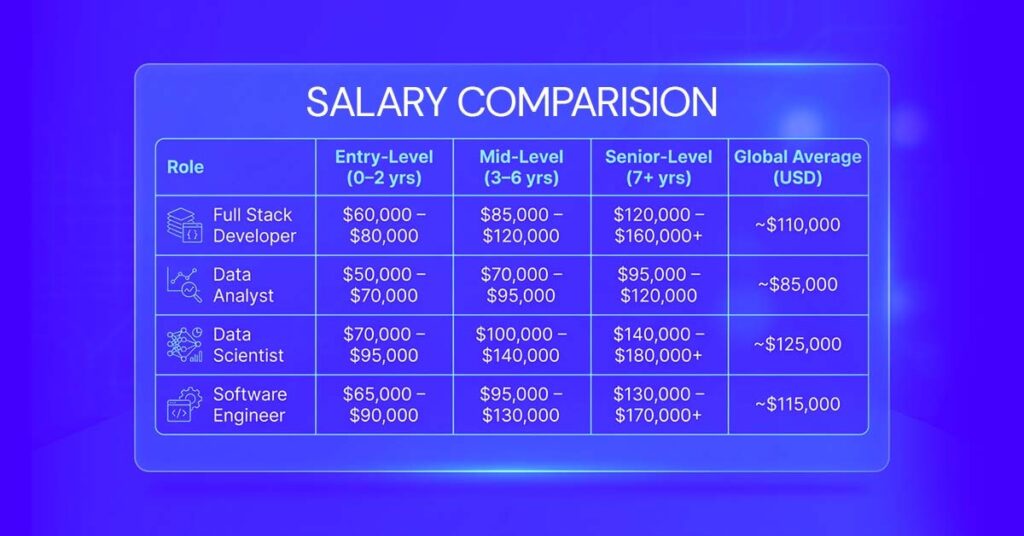
| Role | Entry-Level (0–2 yrs) | Mid-Level (3–6 yrs) | Senior-Level (7+ yrs) | Global Average (USD) |
| Full Stack Developer | $60,000 – $80,000 | $85,000 – $120,000 | $120,000 – $160,000+ | ~$110,000 |
| Data Analyst | $50,000 – $70,000 | $70,000 – $95,000 | $95,000 – $120,000 | ~$85,000 |
| Data Scientist | $70,000 – $95,000 | $100,000 – $140,000 | $140,000 – $180,000+ | ~$125,000 |
| Software Engineer | $65,000 – $90,000 | $95,000 – $130,000 | $130,000 – $170,000+ | ~$115,000 |
Key Insights
- Data Scientists earn the highest due to expertise in machine learning, AI, and predictive analytics.
- Full Stack Developers and Software Engineers maintain strong salary growth due to demand in web development and system design.
- Data Analysts start lower but grow steadily with advanced data analysis techniques and business intelligence skills.
- Additionally, expertise in cloud (AWS), DevOps, Big Data, and specialized tools significantly increases earning potential.
Job Growth and Future Trends
Both fields show strong growth. Additionally, trends include:
- Cloud computing
- Machine learning
- Blockchain
- Big data
Furthermore, demand for hybrid roles continues to increase.
Which Career Path is Right for You?
Choosing the right path depends on your interests and strengths. Additionally, you must evaluate how you approach problems and what kind of work excites you daily. If you enjoy building products, designing interfaces, and working on both front-end and back-end development, then full stack development suits you. Furthermore, this path fits those who enjoy coding, system design, and creating scalable web applications.
On the other hand, if you prefer working with numbers, patterns, and insights, then data analytics becomes a better choice. Additionally, this path suits individuals who enjoy data science, statistical analysis, and data-driven decision-making. You will spend time interpreting data, building dashboards, and generating business insights.
Furthermore, both careers offer strong growth, flexibility, and high demand. The final decision depends on whether you prefer building systems or analyzing data.
Explore More
Also Learn about Full Stack Developer vs Data Science
Learning Pathways for Both Careers
| Category | Full Stack Development | Data Analytics |
| Learning Platforms | Use platforms like Udemy and FreeCodeCamp to learn web development from basics to advanced. Additionally, these platforms cover front-end development, back-end development, and full stack frameworks. Courses include HTML, CSS, JavaScript, along with React, Angular, Node.js. Furthermore, learners build real-world projects and understand complete tech stack workflows. | Use platforms like Coursera and DataCamp to learn data science and analytics. Additionally, these platforms focus on data analysis techniques, data visualization, and business intelligence. Courses include Python, R, SQL for analytics, and machine learning basics. Furthermore, learners work with datasets and real-world case studies. |
| Core Learning Focus | Focus on building applications. Additionally, learn web application development, API development, and server-side programming. Understand how front-end interacts with back-end systems. Furthermore, learn debugging, deployment, and system design. | Focus on analyzing data. Additionally, learn data processing, data mining, and statistical analysis. Understand how to extract insights and support data-driven decision making. Furthermore, learn predictive analytics and reporting techniques. |
| Certifications | Pursue certifications like AWS Certified Developer. Additionally, these certifications validate knowledge in cloud computing, deployment, and DevOps practices. Learn to use Docker, Kubernetes, and cloud infrastructure. Furthermore, certifications improve job credibility in software engineering roles. | Pursue certifications like Google Data Analytics and IBM Data Science. Additionally, these certifications validate skills in data analysis, data modeling, and visualization tools. Furthermore, they improve credibility in business intelligence and analytics roles. |
| Tools & Technologies Learned | Learn tools like React, Angular, Node.js, ExpressJS, Django. Additionally, work with SQL, Git, Docker, and AWS. Understand API integration, database management, and cloud deployment. Furthermore, explore DevOps workflows and scalable architectures. | Learn tools like Python, R, SQL, Tableau, and Power BI. Additionally, work with Big Data tools like Hadoop and Spark. Understand machine learning, statistical models, and data dashboards. Furthermore, use analytical tools for automation and reporting. |
| Practical Learning Approach | Build projects like portfolios, blogs, and e-commerce applications. Additionally, create SaaS platforms and API-based systems. Use full stack technologies to simulate real-world scenarios. Furthermore, deploy projects using cloud platforms. | Work with datasets and real-world problems. Additionally, create dashboards, reports, and predictive models. Perform data visualization and statistical analysis. Furthermore, build case studies and data-driven solutions. |
| Skill Development Outcome | Develop skills in software engineering, system design, and application development. Additionally, improve problem-solving, debugging, and teamwork. Become capable of handling full product lifecycle. | Develop strong data analyst skills, analytical thinking, and attention to detail. Additionally, improve communication of insights through dashboards and reports. Become capable of solving business problems using data. |
| Career Readiness | Prepare for roles like Full Stack Developer, Software Engineer, or Web Developer. Additionally, gain ability to work in DevOps and cloud environments. | Prepare for roles like Data Analyst, Business Intelligence Analyst, or Data Scientist. Additionally, gain ability to support strategic decisions using data insights. |
Conclusion
Both Full Stack Development and Data Analytics offer strong career opportunities. Additionally, each field provides unique advantages based on your interests. Full stack developers focus on building applications using front-end and back-end development. Furthermore, they work with full stack technologies, APIs, and cloud systems. On the other hand, data analytics focuses on extracting insights using data science, statistical analysis, and machine learning. At Techstack Digital, both domains play a critical role in helping businesses scale, innovate, and modernize their software infrastructure.
Choosing between these paths depends on your goals. Additionally, consider whether you prefer creating systems or analyzing data. Both roles continue to evolve with advancements in AI, big data, and cloud computing. As a result, either choice can lead to long-term success in the tech industry.